Complete DNA casework review
Bench notes, results, mixture interpretation, and the statistical conclusions — read line by line by an analyst trained by the FBI to audit laboratories against its Quality Assurance Standards.
Forensic DNA Expert & Genetic Genealogy
IRIS's forensic DNA expert has been accepted as an expert witness more than 150 times, for prosecution and defense alike. We review DNA casework, assess what aged evidence can still yield, and apply investigative genetic genealogy — for attorneys, law enforcement agencies, and families across the U.S. and Canada.
Retained by both sides · Free initial consultation for counsel · Conflicts checked first
An agency or a family with a profile that never matched? Start hereOur team’s casework has been featured by






150+
Times accepted as an expert
in serology and/or forensic DNA
27+
Years in forensic DNA
state, federal-contract, and private labs
25+
Depositions
in criminal and civil matters
Both
Prosecution and defense
pre-trial and trial assistance
Figures are Suzanna Ryan's own testimony and laboratory record.
For counsel
Collection, testing, interpretation, statistics. A report gives you the conclusion; the case file shows how it was reached. We review the whole of it and tell you what it supports — whichever side you are on.
Bench notes, results, mixture interpretation, and the statistical conclusions — read line by line by an analyst trained by the FBI to audit laboratories against its Quality Assurance Standards.
Body-fluid identification, and evidence collection with alternate light sources and the M-Vac wet-vacuum system — for items never tested, or tested with older methods.
What aged or degraded evidence can realistically still yield, which test gives it the best chance, and what is lost if a sample is consumed — assessed before anything is tested.
Making sense of the lab report, identifying what to request in discovery, and preparing counsel to examine the DNA evidence and the analyst who produced it.
Deposition and trial testimony on her own review — from an expert accepted more than 150 times, in 21 states, Washington D.C., and U.S. military courts.
Where a profile exists or can be developed and never matched a database, genealogy can work through relatives toward an identity — for post-conviction and cold matters alike.
Why this expert
Earlier in her career, Suzanna Ryan was a crime laboratory analyst, a DNA technical leader and quality assurance manager, and an auditor trained by the FBI to assess laboratories against its Quality Assurance Standards. She knows what a complete, well-documented result looks like, because she has produced them and checked them.
She is certified as a Fellow in Molecular Biology by the American Board of Criminalistics, holds an MS in Forensic Science, and has published in the Journal of Forensic Sciences and Forensic Science International: Genetics. National networks ask her to explain DNA evidence on air — from Forensic Files to the History Channel — and the producers of Starz's Wrong Man retained her to review the DNA case file in the Kenneth Clair case.
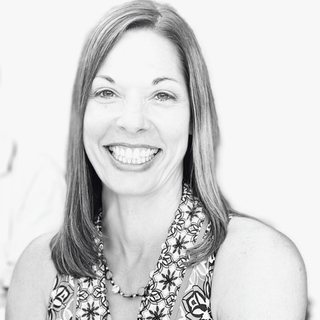
Suzanna Ryan
Forensic DNA & Genetic Genealogy Expert
Laboratory career, before IRIS
Media appearances are as an independent DNA commentator. Except for the retained Wrong Man review, they do not indicate involvement in the underlying case.
Investigative genetic genealogy
DNA testing has grown far more sensitive, and genealogy can now reach an identity through relatives when the criminal databases return nothing. It is how a 1991 homicide was resolved three decades later.
Ask whether your case is a candidateCrime-scene or unidentified-remains DNA that never matched anyone in the criminal databases.
A suitable sample is tested for the kind of DNA profile genealogy databases use.
Matches to distant relatives in databases that permit law enforcement use are built into family trees toward a name.
A lead is never the answer on its own. A conventional DNA comparison confirms or excludes the person the tree points to.
Proof it can be done
Before she founded IRIS, Kathy Decker was head detective on the Sarah Yarborough investigation with the King County Sheriff's Office. The DNA from the scene matched no one for decades. She kept re-examining it as the science advanced, and led the forensic genetic genealogy work that finally produced a name.
This case was led during her law-enforcement career, not as an IRIS engagement. It is the experience we bring to every DNA case we take on.
1991
Sarah Yarborough, 16, is murdered on the Federal Way High School campus. Male DNA is recovered from the scene.
The years after
The profile is submitted to state and national databases without a match, and re-evaluated as the technology advances.
2011
Forensic genetic genealogy work begins, with Dr. Colleen Fitzpatrick.
2019
The genealogy narrows the profile to two brothers. DNA from a discarded cigarette matches the crime-scene profile.
2023
Patrick Nicholas is convicted and sentenced — thirty-two years after the murder.
Agencies & families
The same expert and the same methods, engaged by the agency that holds the evidence or the family still waiting on it.
For law enforcement
We assess what the evidence you are holding can still yield, the testing strategy most likely to get a result, and whether the case is a candidate for genetic genealogy — under your direction. The agency keeps the case and the credit.
Contract-ready · UEI ZDSEPLP3CSL5 · CAGE 11VM4
For families
A profile that produced no name years ago may not be the end of it. We look at what evidence still exists and what current testing and genealogy can do with it — and we tell you plainly if the answer is no. Funding help may be available through The Lindsey Baum Foundation.
Confidential and no obligation
How an engagement runs
1
We clear conflicts before we look at anything. Then a short call: what the evidence is, where the case stands, and what you need to know.
2
The lab report, the bench notes, the data, and the statistics — or, for an unmatched profile, what evidence exists and how it has been stored.
3
What the DNA supports and what it doesn't, with the methodology documented — including the conclusions that don't help.
4
Re-testing, genetic genealogy, deposition, or trial testimony — whatever the findings actually support.
Before you retain anyone
Both. Our DNA expert has provided pre-trial and trial assistance to prosecution and defense alike, and has been accepted as an expert more than 150 times. IRIS also trains and supports law enforcement agencies. We take a position on what the evidence supports, not on who retained us — which is what makes the opinion worth something when it is challenged.
Start with the laboratory report. A complete review needs the case file behind it — the bench notes, the underlying data, and the statistical calculations. If you don't have those yet, we'll tell you what to ask for.
Yes, early, and in plain language. A review that concludes the DNA will not carry the argument is a real answer, and you should not find that out on cross-examination. We would rather lose the engagement than give you an opinion that won't hold up.
Often, depending on how it was collected and how it has been stored. Evidence that produced nothing years ago may yield a profile with current methods. But testing can consume a sample, so what is realistically possible is assessed before anything is tested — and we will tell you plainly if the answer is no.
It is a way to work from a DNA profile that never matched anyone in the criminal databases toward an identity, by finding relatives in genealogy databases that permit law enforcement use and building family trees. It needs a suitable sample, and its use is governed by the databases' own policies and, in some states, by law — so in practice it runs with the agency that holds the case. Any lead it produces is confirmed with a conventional DNA comparison.
Possibly, and we'll tell you honestly. The first step is establishing what evidence still exists and what has been done with it. Families usually can't obtain lab files directly, so where the agency is willing we work with the detectives. Cost should not stop you calling: our partner, The Lindsey Baum Foundation, funds expert services including DNA analysis for families of unsolved murders and missing persons.
Each engagement is scoped individually, and you get the scope in writing before any work starts. For counsel, the initial consultation is free, and conflicts are cleared before we look at anything.
Throughout the United States and Canada. Our DNA expert has testified in 21 states, Washington D.C., and U.S. military courts in Germany and Japan. Tell us where the case is.
Confidential DNA Case Review
What evidence is involved, where the case stands, and what you need to know. We'll clear conflicts, then tell you plainly what the DNA can support — and what it can't.